|
WHAT SHOULD I EXPECT? (page 2) |
|
[Return to Page 1] or [Return to Trinity's Home Page] (Q) How do you decide what scripture readings are going to be read? (A) The Episcopal Church uses the Revised Common Lectionary to choose the scripture which will be read. (Q) What in the world is the Revised Common Lectionary? (A) The Revised Common Lectionary or "RCL" is a book which organizes readings for each Sunday of the year. It follows a 3 year cycle which generally connects a Gospel passage with other complementary readings. If you attend church regularly during the cycle, you will have heard much of the Bible read in worship. Perhaps the best feature of the RCL is that it keeps priests from preaching solely on messages that are easy or scripture that they like, and forces them to "branch out" and expand their sermons. (Q) Why do people in the congregation have responses to make during the worship service? I'm used to being in a church where I sit in my pew and be completely quiet. (A) One of the strengths of the Episcopal Church is the participatory nature of worship. Lay people are engaged in various ways; they aren't simply present as "observers." Among other jobs, lay people read scripture lessons, say prayers, and participate in distributing communion. Of course, you can always sit in your pew quietly, if that's what you prefer. (Q) Why do you have kids working in your service? Why do you call them acolytes? Can you trust them to do what they are supposed to do? (A) The word acolyte comes from the Greek word meaning "helper." Acolytes are generally younger people who serve various roles in our worship -- like carrying processional crosses, torches, banners, etc. In the past, serving as an acolyte was sort of a way that children could decide whether they might like to become priests someday. Now, it is more of a way to ensure that children are just as involved in worship as much as adults since they are equally important to God. As far as trusting them is concerned? Everybody makes mistakes and Trinity's rector has found that acolytes generally take their jobs very seriously. |
 The Episcopal Church
Welcomes You
The Episcopal Church
Welcomes You
Our Presiding Bishop
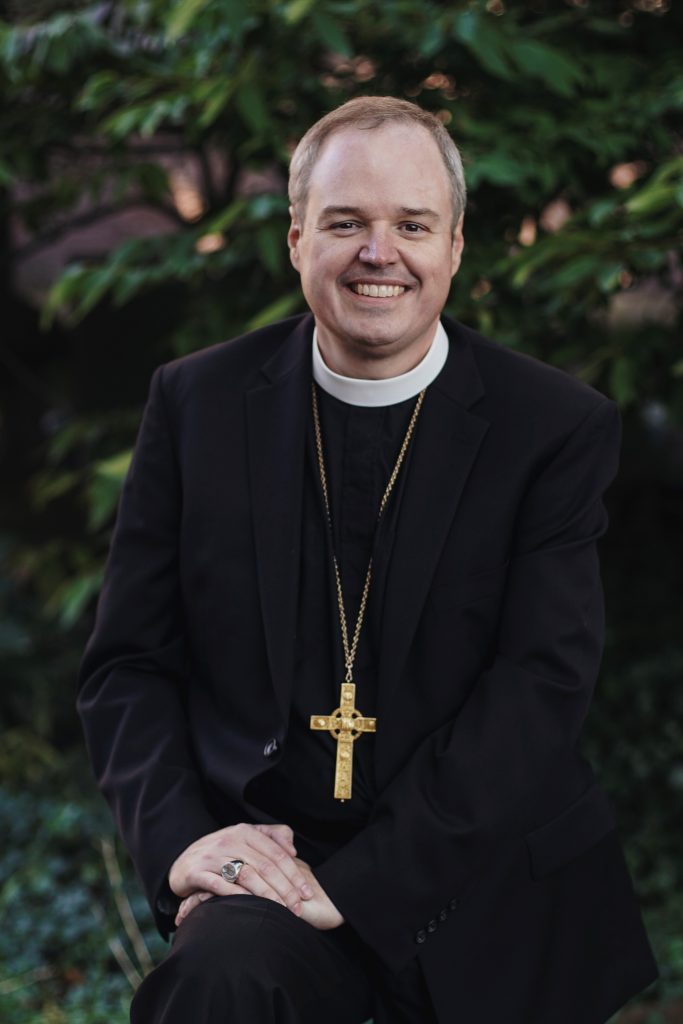
The Most Rev. Sean W. Rowe
28th Presiding Bishop & Primate
The Most Rev. Sean W. Rowe was elected presiding bishop and primate of The Episcopal Church in June 2024 and took office on Nov. 1 for a nine-year term. In this role, he serves as the church’s chief pastor and CEO. Known for his expertise in organizational learning and adaptive change, Rowe is committed to strengthening support for local ministry and mission.
He was ordained bishop of the Episcopal Diocese of Northwestern Pennsylvania in 2007 after serving as rector of St. John’s in Franklin, Pennsylvania, for seven years. From 2014 to 2018, he served as bishop provisional of the Episcopal Diocese of Bethlehem, and from 2019 to 2024, he led a partnership between the Episcopal Dioceses of Northwestern Pennsylvania and Western New York.
Rowe holds a bachelor’s degree in history from Grove City College, a Master of Divinity degree from Virginia Theological Seminary, and a doctorate in organizational learning and leadership from Gannon University. He has served as a leader of many civic and churchwide organizations and governance bodies, and as parliamentarian for the House of Bishops.
Our Family