|
FAQ: THE CREEDS (page 2) |
|
[Return to Page 1] or [Return to Trinity's Home Page] (Q) Who were the creeds written to oppose? (A) The Apostles' Creed seems to have been written to oppose the Gnostics, who believed that the god who created the universe was not the same god manifested and proclaimed in Jesus. The Nicene Creed was generally written to oppose the followers of a priest named Arius, who believed Jesus was not actually God but merely like God. (Q) Why do we use the Nicene Creed during Eucharistic services and the Apostles' Creed during other types of services? (A) Because the Nicene Creed deals with the divinity of Jesus, it has a direct correlation with the atoning action of his death upon the cross and the sacrificial nature of his body and blood. The Apostles' Creed, which happens to affirm our physical bodies as a creation of the one, true God is connected to services which tend to concern our physical bodies. (Q) How are the creeds arranged? (A) The Nicene and Apostles' Creeds are generally arranged in three paragraphs. Each paragraph generally corresponds with and comments upon the nature of each portion of the Trinity: Father, Son and Holy Spirit. (Q) Whats this controversy concerning the creeds I might have read about? (A) You are probably thinking about the part of the Nicene Creed that states the Holy Spirit proceeds from the Father and the Son. Western (Roman) and Eastern (Orthodox) Christians have long disagreed about the and the Son portion of the creed which is known as the Filioque Clause. There are good arguments on both sides, but they are probably better left to those dedicated theologians with plenty of time on their hands. Basically, Eastern Christians leave out the Filioque Clause. |
 The Episcopal Church
Welcomes You
The Episcopal Church
Welcomes You
Our Presiding Bishop
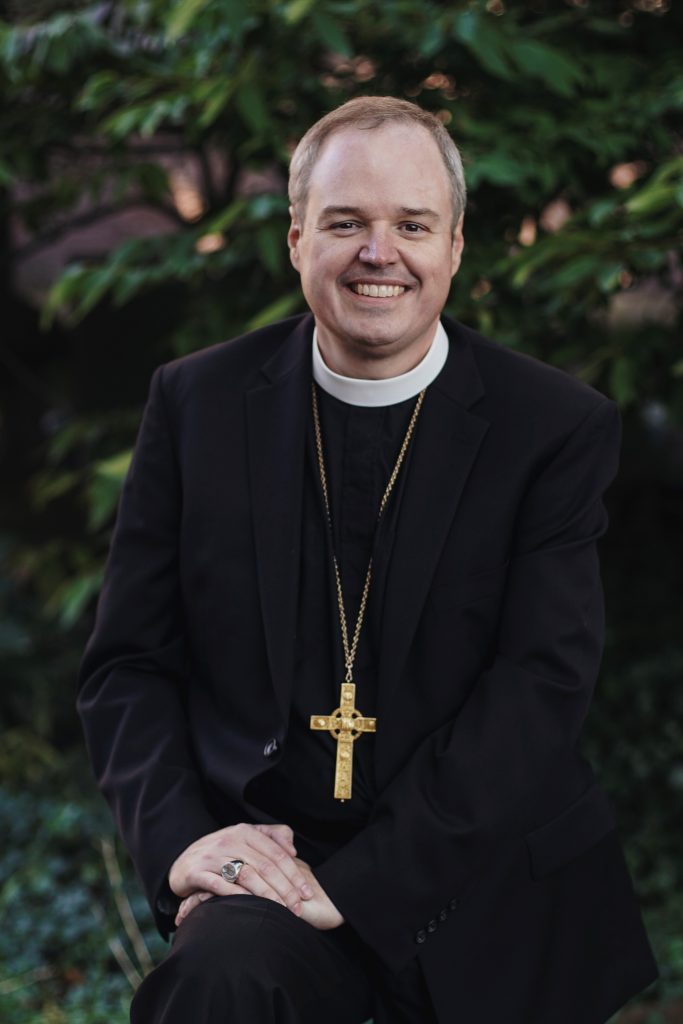
The Most Rev. Sean W. Rowe
28th Presiding Bishop & Primate
The Most Rev. Sean W. Rowe was elected presiding bishop and primate of The Episcopal Church in June 2024 and took office on Nov. 1 for a nine-year term. In this role, he serves as the church’s chief pastor and CEO. Known for his expertise in organizational learning and adaptive change, Rowe is committed to strengthening support for local ministry and mission.
He was ordained bishop of the Episcopal Diocese of Northwestern Pennsylvania in 2007 after serving as rector of St. John’s in Franklin, Pennsylvania, for seven years. From 2014 to 2018, he served as bishop provisional of the Episcopal Diocese of Bethlehem, and from 2019 to 2024, he led a partnership between the Episcopal Dioceses of Northwestern Pennsylvania and Western New York.
Rowe holds a bachelor’s degree in history from Grove City College, a Master of Divinity degree from Virginia Theological Seminary, and a doctorate in organizational learning and leadership from Gannon University. He has served as a leader of many civic and churchwide organizations and governance bodies, and as parliamentarian for the House of Bishops.
Our Family